

The AGRAL Project
The AGRAL project focused on developing manufacturing technologies for a specific cermet material designed to perform in harsh, high-temperature, and corrosive environments. Based on the project description available on the archived site, the work aimed to assess whether this material could support lower direct carbon emissions in aluminium electrolysis and also serve in a second application area linked to hydrogen and fuel cell systems.
Project focus
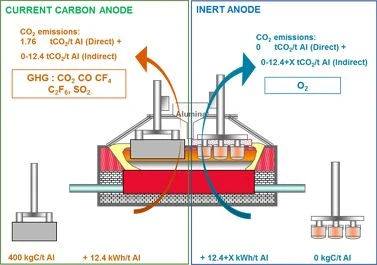
AGRAL stands for Advanced Green Aluminum Anodes. The project’s central idea was to improve anode technology by moving toward an inert anode concept. In conventional aluminium production, carbon anodes are consumed during electrolysis. By contrast, the project set out to develop and test a material that could potentially replace the carbon anode in specific conditions. If successful, this approach could reduce direct CO2 emissions during the electrolysis process.
The archived project text presents AGRAL as both a materials development effort and a technology demonstration effort. That means the project was not only about creating a material in the laboratory, but also about examining how it could be manufactured and tested under increasingly demanding conditions.
Two application areas
According to the archived project overview, AGRAL’s development work was directed toward two application areas:
- an inert anode for aluminium electrolysis, with testing described up to industrial scale in Aluminium Pechiney premises;
- hydrogen and fuel cell interconnect protection, with testing described up to pre-prototype scale.
These two directions show that the same base material concept was being evaluated for different operating environments. In both cases, resistance to heat, corrosion, and long-term use were important considerations.
Why the material mattered
The project description notes that the AGRAL cermet had shown outstanding properties in laboratory-scale tests. That kind of result is important, but it is only the first step in a longer development path. Materials that work well in controlled conditions may behave differently when exposed to industrial processes, repeated thermal cycles, or chemical attack over time.
For that reason, AGRAL’s work appears to have combined material formulation, processing methods, and validation testing. The overall objective was to move from promising laboratory findings toward practical manufacturing technologies that could support further development in relevant industrial settings.
What the archived site shows
The archived site presents AGRAL as a collaborative project with regular updates, partner activity, and a news section. The structure of the site also indicates that the project was organized around a main overview page and related topic pages. Those related pages included other subject areas such as the impact of the project and hydrogen and fuel cell application.
For readers trying to understand the project today, it is useful to treat the site as a source of context rather than as a live technical reference. The available material shows the project’s stated goals and thematic scope, but not a full final technical report.
How to check the project information
If you are reviewing AGRAL material or comparing it with related research, it helps to check the following points carefully:
- the project’s stated application areas and whether they are described separately;
- whether a claim refers to laboratory-scale testing, industrial-scale testing, or pre-prototype work;
- the difference between a material concept, a manufacturing method, and a validated industrial process;
- the date or archive context of the information, especially when reading older project pages;
- whether a statement is presented as an objective, a test result, or a confirmed operational outcome.
These checks help avoid overstating what the project established and make it easier to distinguish between research goals and demonstrated performance.
Questions and answers
What was the main goal of AGRAL?
The main goal was to develop manufacturing technologies for a specific cermet material with strong performance in harsh environments, especially for use as an inert anode in aluminium electrolysis.
What are the two application areas mentioned by the project?
The archived project overview identifies two areas: inert anodes for aluminium electrolysis and protection for hydrogen and fuel cell interconnects.
Did the project page claim a final industrial solution?
No. The archived text describes aims, testing levels, and development directions. It does not by itself prove that a final industrial solution was fully established.
Why is the material described as a cermet?
In the project context, cermet refers to a material combining ceramic and metallic characteristics, chosen for durability in demanding thermal and chemical conditions. The page presents this as part of the project’s materials approach.
Where can I find related project sections?
The site structure includes pages for the project overview, news, partners, contact information, legal information, and a sitemap. Related thematic pages are also referenced in the archived navigation.